Renewables for
Tayvallich
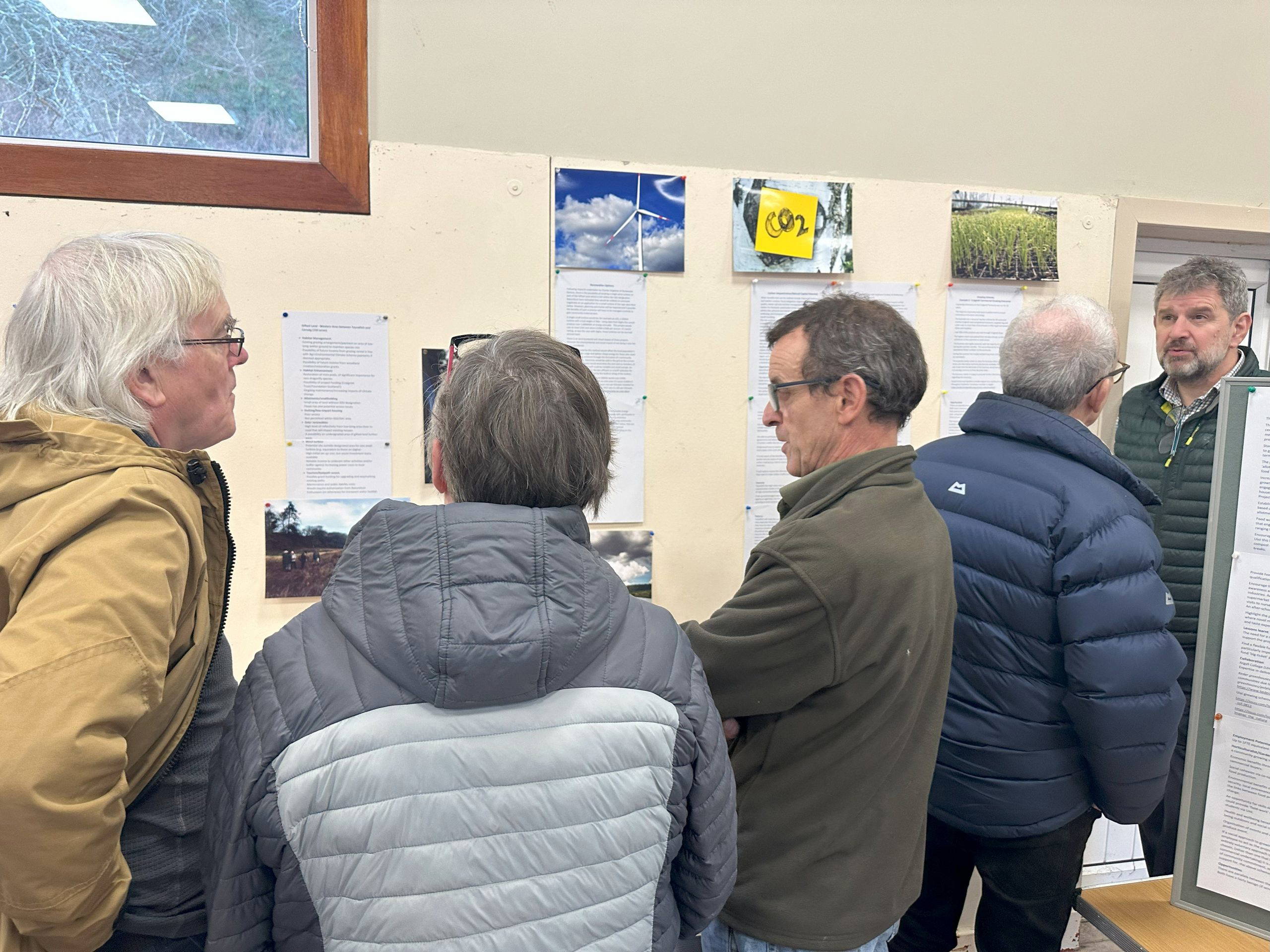
Renewable energy has been a consideration for Tayvallich Initiative from the beginning. Generating electricity is one of the many ways that community land might be used and one that could bring a regular income to the community. It also helps contribute towards a net zero community. With fantastic examples like Gigha just down the coast, our first port of call was to investigate a community-owned wind turbine. And also to look at the potential for generating electricity from solar.
Wind
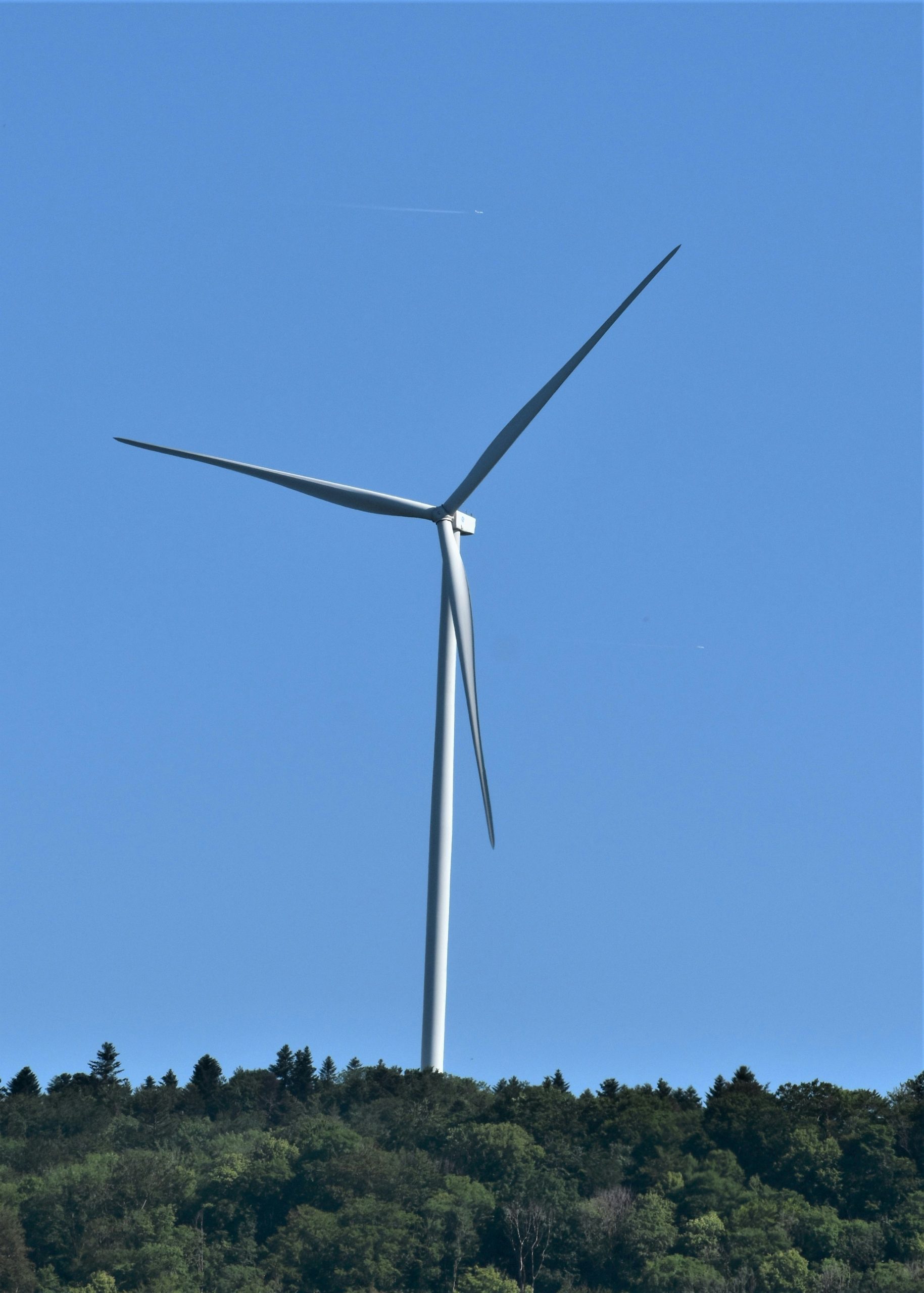
With support from CARES (the Scottish Government’s Community and Renewable Energy Scheme) a feasibility study was commissioned from consultants LocoGen on the possibility of a community wind turbine. Almost immediately several barriers became apparent. First, we are right in the heart of a national scenic area restricting planning permission to turbines shorter than 30m to blade tip. Second, with manufacturers moving to much larger generators the smallest models available are sized well over the initially suggested one megawatt ballpark, with many onshore turbines now reaching 200m to tip. Third, it’s hard to balance smaller wind projects financially. Other options are being explored, including the potential for a community share with other community trusts in larger renewable energy projects.
Solar
As part of the LocoGen feasibility study the option of solar was also explored. Becoming cheaper every year, solar represents a fairly new opportunity for communities in Scotland but still one that requires the right financial circumstances to be viable at smaller scales. Two key ingredients are being able to sell the energy for a higher price than would be achieved from selling via the grid, and making use of government support to subsidise the initial build costs. The latter seems increasingly likely, with CARES distributing funding for capital costs to community projects that have agreed grid offers and planning permission. To sell electricity off the grid we looked initially for energy intensive businesses that might have substantial electricity demands during the day. While other communities have forged alliances with distilleries or manufacturing plants, we didn’t have this option in Tayvallich.
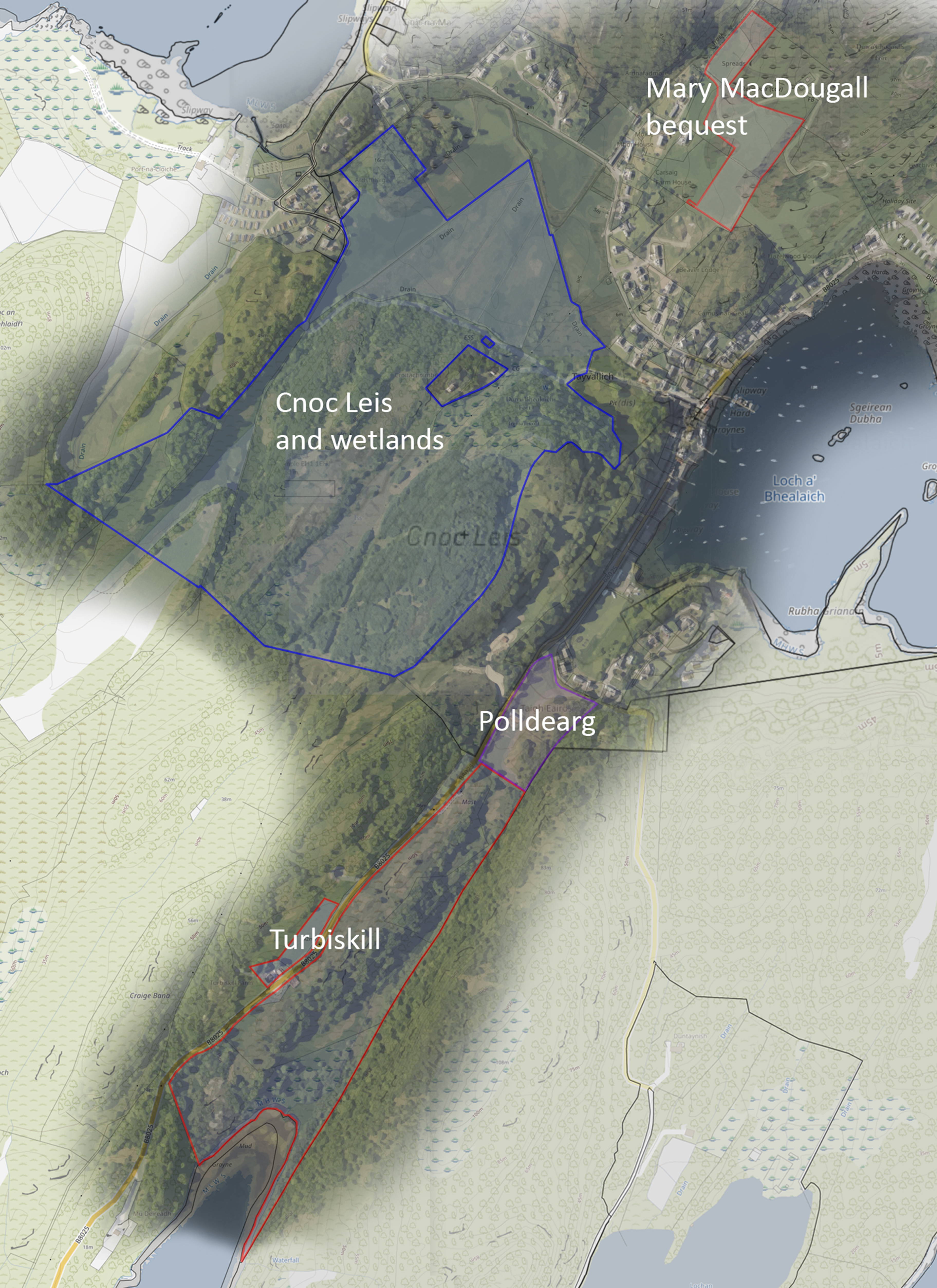
We have instead decided to explore the option of a local energy market alongside undertaking feasibility work for a 200kW solar array on Mary’s Land. A Community Steering Group meeting on renewables in October 2025 included a paper ballot that showed strong support for the resolution “I support the proposal that the scheme for community owned ground mounted solar on Mary’s Land proceeds to apply for planning permission”.
The October 2025 meeting was preceeded the previous month by a neighbours’ meeting, and an information drop-in afternoon in September. An information leaflet was also produced and distributed as a paper leaflet to each household in the village; the leaflet is available via this link.
An application for planning consent was prepared and submitted to Argyll & Bute Council in February 2026.
Energy Local Club
The dream of most community-owned generators is to be able to provide their community with cheaper electricity than the big corporate energy companies can provide. We have some of the highest standing charges in the UK and, without access to the gas grid, high heating costs lead to high levels of fuel poverty. An Energy Local Club is a cooperative entity that uses time-of-use tariffs to trade electricity locally without need of new grid infrastructure. In essence, if electricity is used by a club member within the same half hourly meter reading as it was generated, a prearranged match rate is used that charges less to the consumer and pays more to the generator. This is made possible by cutting out the expensive portion of your tariff assigned to transmission. We have recently commissioned a feasibility study looking at setting up an Energy Local Club in North Knapdale which could facilitate this local energy market. There are a few barriers to membership: a functioning smart meter (now available on 4G signal from Octopus Energy), being fed off the same primary substation at Bellanoch (which excludes Keills and most houses south of the village hall), and each household being signed up to the same supplier. More work is underway to explore this option but it is an exciting possibility.
Shared Ownership